Building the Habitats
Constructing the orbital harbors where our deep space vessels are forged.
Harbors in the Sky
We cannot build ships capable of interplanetary travel on the surface of the Earth; gravity is too greedy a master. The future of exploration relies on orbital habitats and drydocks—sprawling complexes of truss structures and pressurized modules assembled in the silence of microgravity.
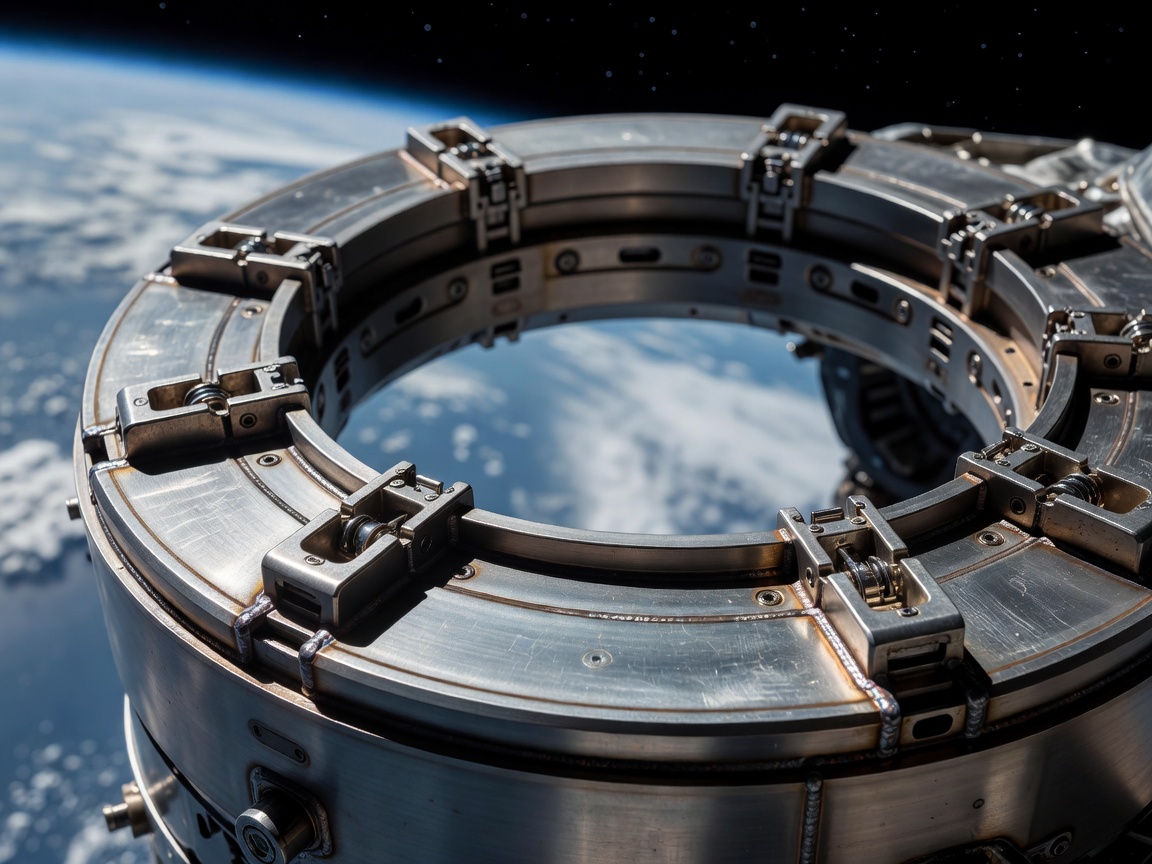
These stations are our basecamps. Here, the hum of life support systems is a constant lullaby. Close-up details of docking rings, marred by the microscopic impacts of micrometeorites, tell the story of a structure holding the line against a hostile environment.
Artificial Gravity and the Human Form
The human body was forged over millions of years by a 1G environment. Without it, bone density evaporates and ocular pressure mounts. Future habitats mandate centrifugal designs—rotating toruses that simulate gravity, allowing crews to maintain physical readiness for the harsh Martian surface.
"The station is a delicate ecosystem of plumbing, wiring, and botanical bays, suspended by velocity over the terminator line of a rotating Earth."
As we plan the infrastructure for the Lunar Gateway and beyond, we realize these stations are not just scientific outposts; they are the first true extraterrestrial cities, the jumping-off points for humanity's next great leap into the dark.